Relax Right Where You Swim, or Build a Space All Its Own
A hot tub extends how you use your backyard beyond the warm months and gives you a place to unwind after a long day. Whether you want it built directly into your pool or set apart as its own feature with a custom surround, Envisioning Green designs and builds both, as part of one connected outdoor living space.
Can I Build a Hot Tub Into My Pool?
Yes. A built-in spa, sometimes called an attached or integrated spa, is constructed as part of the pool itself, typically raised slightly above the main pool with water that spills over the edge into the pool below (a spillover spa), or separated by a wall with its own dedicated jets and controls.
This is one of the most requested features we build, and it works with both gunite and vinyl liner pools, though the design and engineering approach differs depending on which pool type you have.
Ready to explore pool options for your backyard?
Built-In Hot Tubs: Pros and Cons
Pros
One Connected Space The spa and pool share the same footprint, deck, and design language, so the whole area reads as one cohesive feature instead of two separate structures competing for space in your yard.
Efficient Use of Space For smaller yards, a built-in spa makes sense of tight square footage in a way that a separate standalone unit often can't.
Shared or Separate Heating Many built-in spa systems can heat independently from the pool, so you can run a hot spa while the pool stays at a lower temperature, without needing to heat the entire pool volume.
Visual ImpactA raised spillover spa adds height, movement, and the sound of falling water to your pool design, similar to a waterfall feature.
Increases Property Value Because it's a permanent structure built into the pool, a built-in spa is viewed the same way a gunite pool is: a lasting improvement rather than a removable feature.
Cons
Higher Upfront Cost Building a spa into your pool adds meaningfully to the overall project cost compared to a standalone unit, since it requires additional structural work, plumbing, and controls.
Less Flexibility Once Built A built-in spa is permanent. If your needs change down the road, it's not something you can relocate or remove without significant construction work.
Heating Efficiency TradeoffDepending on the system, heating a smaller spa volume separately from the pool can still take real energy, so it's worth discussing heater sizing during design if you plan to use the spa frequently, especially in cooler months.
Construction Timeline Adding a built-in spa extends your overall pool construction timeline, since it's engineered and built alongside the pool rather than dropped in afterward.
Increases Property Value Because it's a permanent structure built into the pool, a built-in spa is viewed the same way a gunite pool is: a lasting improvement rather than a removable feature.
Standalone Hot Tubs
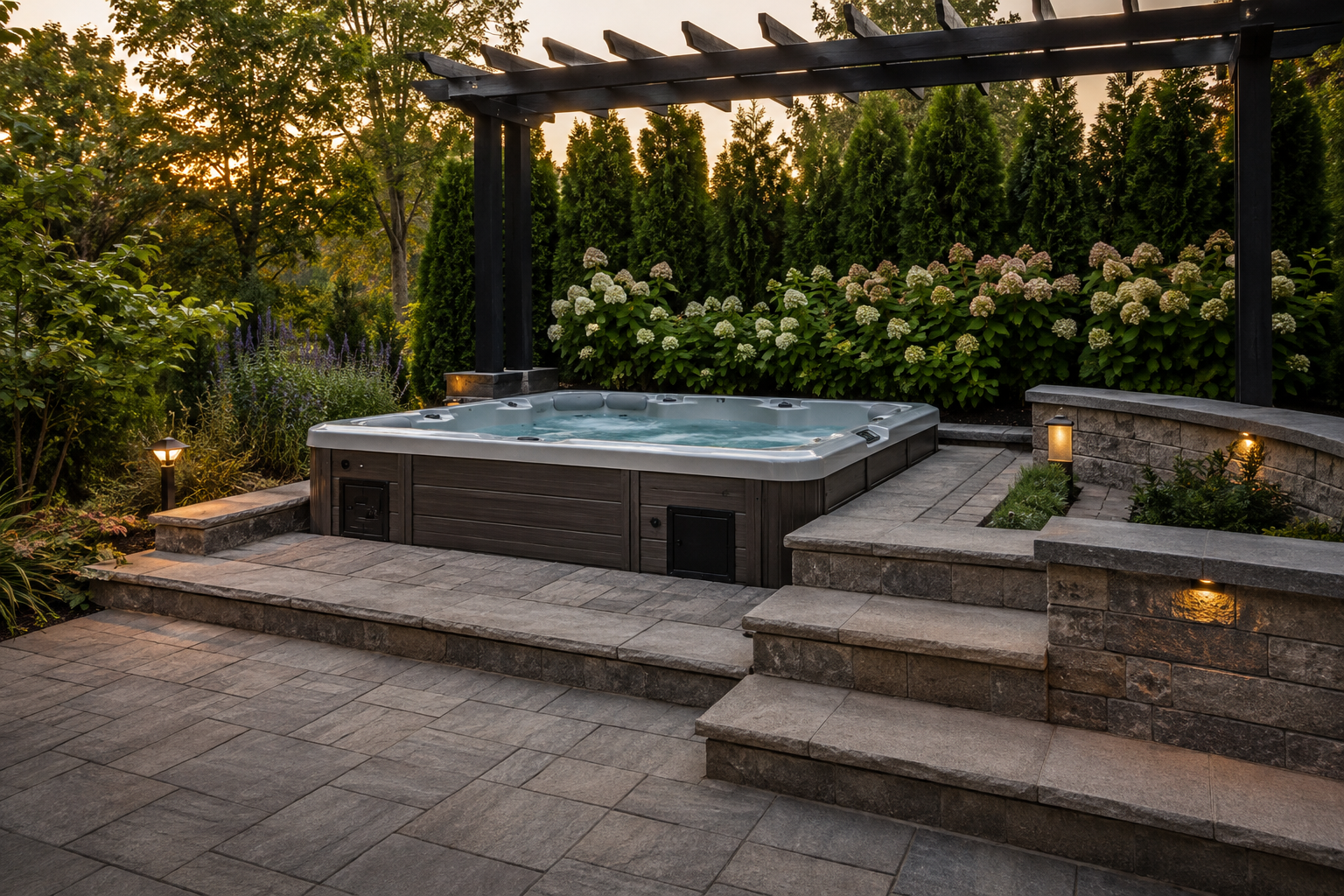
A standalone hot tub is a self-contained unit, either a portable acrylic spa or a custom-built spa, installed independently of your pool. We install these on their own, or design a custom decorative surround around them so they still feel like a built environment rather than a plastic box sitting on a patio.
Standalone Hot Tubs: Pros and Cons
Pros
Lower Upfront Cost Standalone hot tubs generally cost significantly less than a built-in spa, especially portable acrylic units.
Faster Installation A standalone hot tub can often be installed and running in a fraction of the time it takes to build a spa into a pool.
Placement Flexibility You're not limited to placing it next to the pool. A standalone hot tub can go on a deck, patio, or a separate corner of the yard, wherever makes sense for privacy, views, or how you plan to use it.
Independent Use You can run the hot tub without needing to run or maintain a pool at all, which matters if you want a standalone hot tub without a full pool build, or if you want to use it year-round independent of pool season.
Easier to Heat Efficiently Because the water volume is much smaller than a pool, standalone hot tubs generally heat and maintain temperature more efficiently than a built-in spa tied to a larger system.
Cons
Less Integrated Look Without a custom surround, a standalone unit can look like exactly what it is: a self-contained tub sitting on a patio, rather than a built-in part of your landscape.
Doesn't Share Systems with the Pool A standalone hot tub runs its own separate pump, heater, and filtration system, which means separate equipment to maintain rather than one integrated system.
Lifespan Considerations Portable acrylic spa shells typically have a shorter lifespan than a permanently built structure, and most portable units will eventually need equipment replacement or full unit replacement.